Welcome to the Oregon Wine Food Brew Fest
Circa 2012 -2013
(First Taste Oregon)
January 25 & 26, 2013
Follow us on Facebook: facebook.com/oregonwinefoodbrewfest




Admission, Lodging & Packages
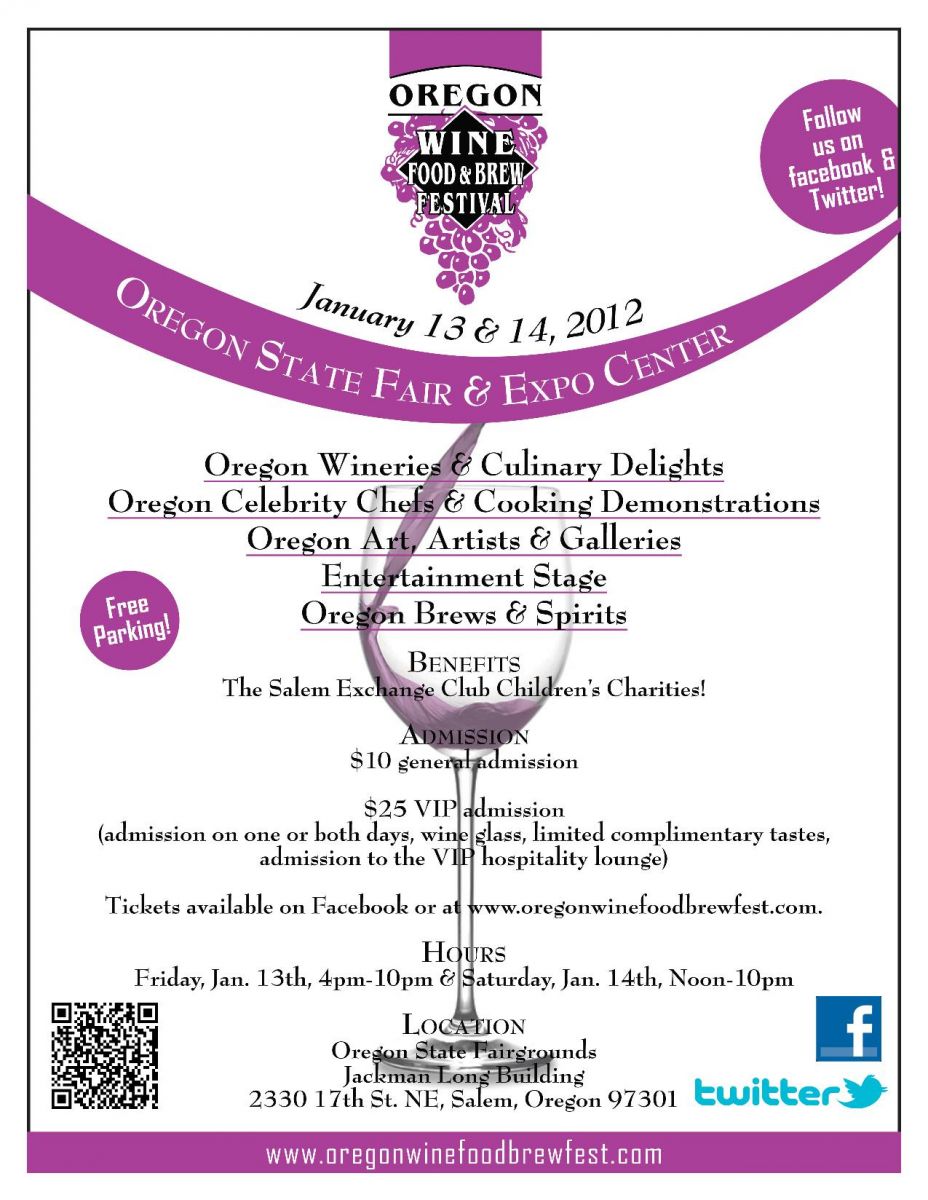
- Daily admission $10 at the door / includes complimentary parking (tasting and samples are additional)
- (Seniors 65+ $8) Youth 12 and under free - must be accompanied by adult.
- Minors admitted until 7pm - no minors permitted on premises past 9 pm
- VIP Packages $25 / include Admission, VIP lounge, Wine Glass,
(no senior or youth pricing on VIP tickets) Adults only in VIP area (Limited quantities)
ONLINE TICKETS HERE - NO FEES! (CLOSES NOON FRIDAY)
- Lodging packages with shuttle service available at the Red Lion Salem
800-248-6273 mention the festival to get a $74 per night plus tax rate -
They have VIP packages for $115 includE VIP admissions.
Location
Oregon State Fairgrounds, Americraft Cookware Center.
Click here for a map and directions
Dates & Times
- Friday, January 13, 2012 - Open: 4:00 p.m.; Close: 10:00 p.m.
- Saturday, January 14, 2012 | Open: Noon; Close: 10:00 p.m.
Featured Attractions
- Oregon Vineyards & Wineries, Oregon Brews, Craft Beers & Spirits
- Northwest Fine Art, Artists and Displays
- Oregon Culinary Features, Demonstrations and Classes
- Live Entertainment
Matthew Price Band, Faerabella, Scott Gallegos, Ellen Whyte, Bourbon Street Jazz, Mike McLaren & The Session Boys,
- Fun & Festive atmosphere
Exhibitors List (more coming)
Up to the minute list click here UPDATED January 6th at 8 pm
Editor: If you searched for "Oregon wine festival" in advance of our 2013 event you may have seen some serious problems in Google's results. We somehow got mixed up with some rehab services for teens with drinking problems. This was a disaster for us, since these results were at the top of the search results and associated our event with a very negative connotation that required many desperate explanations to our supporters and probably kept many visitors from attending. And there was no way to remove Google search results - learn more. Our promoter pointed us to this page which strongly suggests that we were not the only victim of Google's algorithm in this respect - read about even bigger problems created for individuals and businesses due to errors and inappropriate associations created by the search engine. Many reputations have been destroyed by these kinds of errors and Google is never held to account. Fortunately for us, the problem went away a week before we launched, but we would probably have seen an even bigger turnout had we not had to contend with this problem. Thanks to all who helped us overcome this PR disaster.

More Background On OregonWineFoodBrewFest.com
Long before Oregon’s reputation as a hub for artisanal wines, microbreweries, and farm-to-table dining reached national prominence, one festival stood out as a gathering point for the state’s producers, chefs, and enthusiasts. The Oregon Wine, Food & Brew Fest, which later evolved into First Taste Oregon, was more than a weekend event — it was a celebration of the region’s creative and agricultural spirit. Held annually at the Oregon State Fairgrounds in Salem, it united winemakers, craft brewers, distillers, chefs, artists, and musicians in an immersive experience that captured the essence of Oregon’s culture.
Origins and Purpose
The Oregon Wine, Food & Brew Fest was conceived as a showcase for the rapidly expanding Oregon wine industry and the state’s growing craft beer movement. By the early 2010s, Oregon’s Willamette Valley had already become synonymous with world-class Pinot Noir, and microbreweries were thriving in nearly every major city. Festival organizers recognized an opportunity to bring these worlds together — pairing wine and beer with local food artisans and culinary talent under one roof.
The festival’s mission was to provide both exposure for small producers and enjoyment for attendees. It also sought to promote sustainable, locally sourced products, reflecting the “buy local” ethos that defines Oregon’s economy and identity. Over time, this focus expanded to include fine arts, handcrafted goods, and live music, transforming the event into a multifaceted celebration of Oregonian creativity.
Location and Setting
The event was hosted at the Americraft Cookware Center, part of the Oregon State Fair & Exposition Center complex in Salem. This central location was chosen not only for its accessibility — situated roughly an hour from both Portland and Eugene — but also for its ability to accommodate large crowds and diverse exhibits. Visitors could explore booths featuring dozens of wineries and breweries, attend cooking demonstrations, and enjoy live performances, all within walking distance.
The setting emphasized Oregon’s agricultural roots. Surrounded by the fertile Willamette Valley, Salem provided the perfect backdrop for a festival celebrating the bounty of local farms and vineyards. For many, attending the event was a sensory introduction to the state’s terroir — from its distinctive wines and beers to its farm-fresh produce and artisan foods.
Event Highlights and Attractions
Each year’s festival offered an eclectic blend of entertainment, education, and indulgence. Among its signature features were:
-
Oregon Vineyards & Wineries: Dozens of local vineyards poured samples of their most celebrated vintages, from crisp Pinot Gris to bold Syrah and delicate rosé. Many small wineries used the festival as a launch platform for new labels.
-
Craft Beers and Spirits: With Oregon’s craft beer scene among the nation’s most innovative, attendees could enjoy everything from classic IPAs to barrel-aged stouts. Local distillers also showcased small-batch gins, vodkas, and whiskies.
-
Culinary Demonstrations: Professional chefs led cooking classes and pairing demos, emphasizing Oregon ingredients — hazelnuts, berries, seafood, and wild mushrooms were frequent stars of the show.
-
Northwest Fine Art Displays: Local artists exhibited paintings, pottery, jewelry, and other crafts, giving the event a creative flair beyond food and drink.
-
Live Music: Performances by bands such as the Matthew Price Band, Ellen Whyte, Bourbon Street Jazz, and others provided an energetic soundtrack that encouraged dancing and mingling.
The atmosphere was lively and welcoming — a true “taste of Oregon” that brought together communities from across the state.
The VIP Experience
Recognizing that some visitors sought an enhanced experience, organizers introduced VIP Packages that included admission, an event wine glass, complimentary tastings, and access to the VIP Lounge. This area offered catered bites, private tastings, and exclusive presentations. The Red Lion Hotel in Salem offered lodging packages with shuttle service, encouraging out-of-town guests to make a weekend of the event. The VIP experience became a hallmark of the festival’s premium hospitality and a favorite among returning attendees.
Admission and Accessibility
One of the festival’s strengths was its inclusivity. General admission was affordable — typically around $10 — with discounts for seniors and free entry for children accompanied by adults until early evening hours. This balance between family-friendly accessibility and adult-oriented entertainment made the event appealing to a broad audience.
Organizers also prioritized convenience: parking was complimentary, online tickets could be purchased without fees, and the site offered ample space for large crowds. The festival’s organization and logistics were frequently praised in reviews.
A Digital PR Challenge and Google Search Mix-Up
One of the more memorable episodes in the festival’s history occurred around 2012–2013, when organizers faced a surprising online crisis. In the weeks leading up to the event, a Google search for “Oregon wine festival” returned misleading results that incorrectly associated the festival with a rehabilitation program for teens with drinking problems. This unfortunate algorithmic mix-up had real consequences: confusion among attendees, reputational harm, and extensive last-minute damage control.
Organizers noted that despite their efforts to contact Google, there was no straightforward way to remove or correct the false association. It wasn’t until shortly before the 2013 launch that the issue resolved itself. Nevertheless, it underscored the vulnerability of small organizations to digital errors and search engine dynamics. The episode became a local case study in how reputation and technology can collide — a theme that resonated widely in Oregon’s small-business community.
Transition to “First Taste Oregon”
After 2013, the festival was rebranded as First Taste Oregon, reflecting a broader and more inclusive mission. The new name emphasized discovery and experience — the idea that attendees could sample Oregon’s best products “for the first taste” each year. The event retained its Salem venue and many of its traditions but expanded its exhibitor list and programming.
First Taste Oregon built on the original foundation of the Wine, Food & Brew Fest by featuring over 50 wineries, breweries, distilleries, and artisans, as well as an expanded arts marketplace and additional live music stages. The event’s Swank Lounge, introduced as part of the rebranding, became a symbol of its elevated aesthetic and attention to detail.
This transformation helped secure the festival’s place as one of Oregon’s top annual culinary events, alongside others such as the Oregon Brewers Festival in Portland and the International Pinot Noir Celebration in McMinnville.
Audience and Community Impact
From its earliest years, the Oregon Wine, Food & Brew Fest drew a diverse crowd. Attendees ranged from serious oenophiles and home brewers to casual foodies and families seeking a weekend outing. The event’s welcoming tone — part farmers’ market, part music festival — helped cultivate a loyal following.
For local businesses, the festival offered invaluable exposure. Small wineries and breweries often credited the event with helping them reach new customers and establish distribution relationships. Local artisans — from cheese makers to jewelry designers — benefited from the festival’s supportive, community-driven environment.
Moreover, the event contributed to Salem’s tourism economy by attracting thousands of visitors during the winter months, a traditionally quiet period for travel. Nearby hotels, restaurants, and transportation services all enjoyed an uptick in business during the festival weekend.
Cultural Significance
Beyond its economic benefits, the Oregon Wine, Food & Brew Fest — and later First Taste Oregon — played an important role in shaping the cultural narrative of Oregon’s food and beverage identity. It championed values that have since become synonymous with the state: sustainability, craftsmanship, and authenticity.
By showcasing locally sourced food and drink, the festival reinforced Oregon’s reputation as a leader in the farm-to-table movement. It also highlighted the collaborative spirit among producers — winemakers pairing with chefs, brewers working with chocolatiers, distillers teaming up with local farms. In doing so, it mirrored the state’s broader cultural emphasis on cooperation and innovation.
Reviews and Reception
Public response to the festival was consistently positive. Attendees frequently praised the event for its diversity of offerings, organization, and friendly atmosphere. Many appreciated the opportunity to interact directly with producers and sample products not yet available in stores.
Local media outlets described the festival as “a feast for the senses,” commending its ability to blend sophistication with approachability. The inclusion of live music and art displays added to the appeal, transforming what might have been a simple tasting event into a full cultural experience.
Over the years, the event was featured in numerous regional guides to Oregon’s best food and wine festivals. Publications noted its commitment to highlighting local talent and its role in introducing newcomers to Oregon’s artisanal food scene.
Press and Media Coverage
Media attention helped elevate the festival’s visibility beyond Salem. Articles and listings appeared in regional tourism publications, newspapers, and broadcast segments that covered lifestyle and entertainment. Sponsors such as Comcast and local radio stations provided promotional support, ensuring that both urban and rural audiences were aware of the upcoming festivities.
The event also benefited from strong social media engagement. Its Facebook page offered updates, exhibitor previews, and behind-the-scenes looks at setup days. This digital presence fostered anticipation among followers and helped the festival connect with younger audiences.
Economic and Regional Importance
The festival’s emphasis on local vendors aligned perfectly with Oregon’s economic values. It provided a platform for small producers to expand their reach without the overhead of large-scale trade shows. For consumers, it offered a tangible way to support the regional economy and discover new brands.
From an economic standpoint, the influx of festivalgoers to Salem translated into significant hospitality revenue — hotel bookings, restaurant reservations, and local retail spending. As the event matured under the First Taste Oregon brand, its impact on regional tourism became more measurable, contributing to Oregon’s positioning as a top destination for culinary travel.
Legacy and Continuing Influence
Though its name changed, the spirit of the original Oregon Wine, Food & Brew Fest continues to shape how Oregonians celebrate their culinary heritage. The event set a precedent for integrating wine, beer, spirits, food, and art into a single cohesive experience. Its influence can be seen in newer festivals across the state that adopt similar formats, emphasizing local identity and community engagement.
In many ways, the Oregon Wine, Food & Brew Fest was ahead of its time — uniting what would later become defining features of Oregon culture: sustainability, craftsmanship, and collaboration. Its evolution into First Taste Oregon ensured that its legacy would endure while adapting to the state’s ever-growing culinary ambitions.